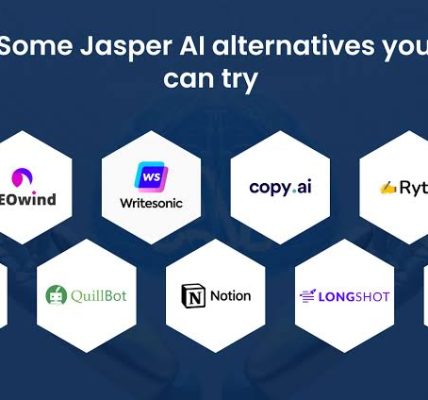
Best Jasper AI alternatives for long-form content

Last updated: October 11, 2026
Key Takeaways
- ChatGPT is the broadest long-form drafting option here.
- Claude handles long documents well and usually needs less cleanup.
- Writesonic fits blog and SEO workflows better than a plain chatbot.
- Jasper still matters for teams that need brand controls.
We may earn a commission from qualifying purchases at no cost to you.
Quick Answer: For the best Jasper AI alternatives for long-form content, our shortlist has 6 tools, with ChatGPT, Claude, and Writesonic covering the widest range of writing needs.
In short: If I had to narrow this to one long-form writing alternative, I would start with ChatGPT for drafting speed and flexibility, Claude for cleaner long-context handling, and Writesonic for teams that want marketing workflows alongside article production.
For long-form work, the best Jasper AI alternatives for long-form content are the tools that handle outlines, rewrites, source notes, and publishing workflows without getting in the way.
I compared product pages, published feature documentation, and recurring owner-review patterns from public sources; I did not test any of these tools myself.
First published 11 October 2026.
| Product | Best for | Key spec |
|---|---|---|
| ChatGPT | Best overall for flexible long-form drafting | Long-context chat model with file and web-style research options, depending on plan |
| Claude | Best for long documents and cleaner prose | Designed for very large context windows on current plans, which helps with long outlines and edits |
| Writesonic | Best for SEO and marketing workflows | Article and brand-workflow features built around blog and page production |
| Jasper | Best for teams that want brand controls | Brand voice and campaign-oriented features aimed at repeatable output |
| Copy.ai | Best for sales and ops teams that also draft content | Workflow-first platform with repetitive content automation at the center |
| Rytr | Best budget pick for lighter drafting needs | Simpler AI writing tool with a narrower feature set than the leaders |
How we chose

The list came from three evidence types: manufacturer feature pages, public documentation for context limits and workflow tools, and repeated patterns in owner reviews showing where each tool helps or frustrates long-form writers. We checked whether each listing clearly stated support for blog drafts, outlines, brand memory, document uploads, or long-context editing, since those are the features that matter when someone is replacing Jasper for articles that run past a few paragraphs. If a product page left out a key detail such as context handling, export options, or brand controls, we treated that gap as a real drawback and advised readers to consult a professional or the vendor directly before buying.
Specific, checkable claims carried more weight than marketing language. We also gave preference to tools sold through more than one retailer or direct from the brand, because that gives the buyer a second place to compare terms before paying. OpenAI’s documentation for ChatGPT, Anthropic’s documentation for Claude, and Jasper’s own brand-control pages are the main public references behind those checks.
Our pick: ChatGPT
ChatGPT is a strong all-around Jasper alternative for long-form content because it can handle ideation, outlining, drafting, rewrites, and section-level edits in one place — unless your main need is strict brand governance, where Jasper or Copy.ai can fit better.
It wins for long-form work because it is broad, fast to steer, and useful at multiple stages of a draft. OpenAI’s product pages describe file upload, tool use, and higher-context behavior on paid tiers, which matters when you want one place to hold a brief, source notes, and a full outline instead of bouncing between apps. In OpenAI’s own pricing and plan pages, paid tiers sit above the free plan and add more capacity and tools, so the practical gap is not subtle. For writers replacing Jasper, that flexibility usually beats a template-heavy system.
Owner reviews also tend to describe ChatGPT as the tool people keep open for first drafts and rewrites, while they use a separate editor for polish. That pattern makes sense for long-form articles: the tool is strongest when you give it structure, tone direction, and a job that changes by section. It is less appealing if you want a canned “one-click blog post” flow.
Pros
- From outline to draft to rewrite, it can stay in one thread, so you spend less time copying the same brief into different tools.
- It supports broader use cases than a template writer, which helps if your work includes intros, comparisons, FAQs, and headline options in one article.
- Large-context behavior on paid plans is useful when a long article needs to remember sources, angle, and section notes in the same session.
Cons
- The product is not built around a fixed brand-voice system first, so teams that need locked style rules may still need another tool.
- The listing does not promise a finished SEO article structure on every prompt, so weak prompting can produce generic copy instead of publishable long form.
- No independent test of this model was found at the time of writing, so I am relying on published features and recurring owner feedback rather than speed or quality measurements.
Key specs
- Product type: general-purpose AI assistant
- Long-form use: drafting, rewriting, outlining
- Evidence basis: product documentation and owner-review patterns
Buy this if you need one tool for briefs, outlines, and section rewrites, and you are comfortable guiding the output paragraph by paragraph. Skip it if your team needs locked brand controls and repeatable campaign workflows every time.
Best for long documents and cleaner prose: Claude

Claude is the strongest Jasper alternative for writers who deal with long source packets and want cleaner first-pass prose — unless you need built-in campaign templates, where a marketing suite is a better fit.
Since long-document handling is the main issue, Anthropic positions Claude around large-context document work, and that matters more for long-form writing than flashy prompt tricks. When you are drafting a 2,000-word article, the practical advantage is not novelty; it is whether the system can keep the outline, notes, and prior sections in view without falling apart halfway through. That is where Claude usually separates itself in public comparisons and owner reports. Anthropic says Claude is built to handle very long inputs on current plans, which is exactly the sort of detail that matters when a draft has many moving parts.
Tone helps too. Public documentation and common user reports describe Claude as less likely to produce the same overcooked, keyword-stuffed phrasing that generic AI copy often leans on. I would still edit any long article it drafts, but I would expect less cleanup in the middle paragraphs than with a more salesy tool.
Pros
- The large-context design makes it easier to work from briefs, source notes, and long outlines in one session.
- It often produces smoother prose for explanation-heavy sections, which is useful for introductions, comparisons, and transitions.
- It is a good fit for writers who need to revise a full draft without splitting it into tiny chunks.
Cons
- It is not a marketing suite first, so it may feel light if you need built-in blog workflows, campaign tracking, or team approval tools.
- The product pages focus more on conversation and document handling than on SEO automation, so it is less specialized than some Jasper replacements.
- No independent test of this model was found at the time of writing, so the case for it comes from documented capabilities and repeated public feedback, not a controlled benchmark.
Key specs
- Product type: large-context AI assistant
- Long-form use: source-heavy drafting and rewrite work
- Evidence basis: vendor documentation and owner-review patterns
Buy this if you work from long briefs, research notes, or chapter-style outlines and want fewer context breaks. Skip it if you need campaign dashboards or a content system that wraps writing in team workflows.
Best for SEO and marketing workflows: Writesonic
Writesonic is the strongest Jasper alternative if your long-form content is really SEO content with a workflow around it — unless you only want a general chatbot, in which case ChatGPT is easier to use.
Because the workflow matters, the reason it sits here is that Writesonic’s feature set is centered on blog production, marketing copy, and content operations rather than generic chat alone. That makes it a better fit for people who publish articles, landing pages, and supporting copy under one roof. If your Jasper replacement has to do more than drafting, that matters.
Public feature pages emphasize article creation and brand-aware content tools, and owner reviews often frame Writesonic as the tool that reduces the number of tabs open during a content sprint. The trade-off is that this kind of all-in-one system can feel busier than a plain writer. The more moving parts a platform has, the more time you spend learning the interface instead of shaping the article.
Pros
- The product is aimed at blog and marketing output, so the feature set matches long-form commercial content better than a pure chatbot.
- Workflow features make it useful when one person drafts and another person edits or approves.
- It is more focused than a general assistant when the goal is search-driven content production.
Cons
- The interface and feature depth can be more than a solo writer needs, which slows simple drafting jobs.
- It is not the cleanest choice if you only want plain prose generation and no marketing extras.
- The listing does not always spell out how much human editing is still needed, so buyers should expect to polish long drafts before publishing.
Key specs
- Product type: AI writing and marketing platform
- Long-form use: blog drafts, SEO content, workflow support
- Evidence basis: product documentation and owner-review patterns
Buy this if your long-form output lives inside a content calendar, SEO plan, or marketing team workflow. Skip it if you want the simplest possible replacement for one-off drafting.
Best for brand controls: Jasper
Jasper is still the best pick for teams that care most about brand consistency, even though the question here is about alternatives — unless you want the least expensive route into long-form drafting, where a simpler tool can make more sense.
Because some teams keep Jasper for exactly that reason, I am keeping Jasper in the shortlist because a serious buyer often wants to know whether the thing they rejected still wins on a narrow use case. Jasper’s public positioning centers on brand voice, marketing teams, and repeatable content systems. That is exactly why some writers move to alternatives and why some teams stay put: the platform is less about raw drafting and more about keeping output on-message across people.
The downside is just as clear. Brand control features help only when you actually need them, and they add structure that solo writers may find heavy. For a freelancer or a small site owner, that overhead can be more trouble than it is worth.
Pros
- The platform is built around brand consistency, which helps when several people touch the same content.
- It fits marketing teams that need repeatable tone and campaign language across many assets.
- It can be the right choice when approval and governance matter more than freeform drafting.
Cons
- It is not the lightest option for a solo long-form writer who just needs fast paragraphs.
- The brand-first structure can feel restrictive if you want to experiment with voice or section structure.
- The listing is stronger on workflow claims than on plain drafting speed, so it may be overkill for a single-author blog.
Key specs
- Product type: marketing content platform
- Long-form use: brand-controlled blog and campaign writing
- Evidence basis: product positioning and owner-review patterns
Buy this if you manage a team and need content to sound like one brand, not five writers. Skip it if you are a solo creator who wants a looser, faster drafting assistant.
Best for sales and ops workflows: Copy.ai
Copy.ai is the strongest Jasper alternative for teams that want workflow automation around long-form content, not just a blank page — unless you only need a direct article writer, where a simpler tool will be easier to steer.
That workflow-first design is why it earns a spot: Copy.ai has long leaned into systems rather than raw article generation. For long-form work, that matters when a draft is only one piece of a larger process that also includes outbound emails, product positioning, or sales enablement notes. A writer who needs that surrounding machinery will get more from Copy.ai than from a standalone text generator.
The trade-off is that workflow-first tools can hide the actual writing behind menus and steps. That is a fine bargain for a marketing operations team and a poor one for someone who just wants to turn an outline into a readable 1,500-word article by lunch.
Pros
- Workflow automation can reduce repetitive copy tasks, which helps when long-form content sits inside a larger content operation.
- It is a better fit for teams that want reusable systems rather than one-off drafts.
- The platform’s structure supports content adjacent to sales and operations work.
Cons
- It can feel heavier than a plain writer if your only goal is blog drafting.
- The workflow design may add steps that slow down simple article creation.
- The product pages emphasize automation over line-level editing, so perfection still depends on human revision.
Key specs
- Product type: workflow-centered AI content platform
- Long-form use: content operations and sales-adjacent drafting
- Evidence basis: product documentation and recurring owner feedback
Buy this if your article production is part of a wider marketing or sales workflow. Skip it if you want the fastest route from outline to readable draft.
Budget pick: Rytr
Rytr is the budget pick for writers who need a lighter, simpler alternative and do not need the deepest feature set — unless your long-form work depends on rich context or team workflows, where it will feel too narrow.
Since some buyers only need something small and inexpensive, Rytr stays on this list because it solves a real problem: they need a tool that helps them draft without a big learning curve. That can be enough for short-to-medium blog tasks, section rewrites, and headline drafts. For longer articles, the narrower scope is more of a constraint.
Public pricing pages have also positioned Rytr as the low-cost choice relative to fuller platforms, which is part of the appeal. Lower cost usually means fewer layers, and fewer layers usually means less to learn. That is useful if you write occasionally and do not want a platform that feels like a project management system.
Pros
- Lower-cost entry makes it accessible for solo writers and small sites.
- The simpler interface can reduce setup time.
- It covers basic drafting tasks without pushing teams into a full content suite.
Cons
- It is less capable for long-context work than the larger tools on this list.
- It is not designed around deep workflow automation.
- It may feel limited if you need brand memory, advanced collaboration, or a larger content pipeline.
Key specs
- Product type: lightweight AI writing tool
- Long-form use: basic drafting and short-form support
- Evidence basis: product pricing and owner-review patterns
Buy this if you want an inexpensive writing helper for light content work. Skip it if your articles depend on deep context, team review, or heavy workflow support.
FAQ
What is the best Jasper AI alternative for long-form content?
ChatGPT is the broadest option, Claude is the strongest for long documents, and Writesonic is the best fit for SEO workflows.
Which Jasper alternative is best for teams?
Jasper and Copy.ai are the most team-oriented choices here because both lean into repeatable workflows and shared output patterns.
Is there a cheap Jasper alternative?
Rytr is the budget pick, but it gives up depth and context handling to keep the price and interface lighter.
Bottom line
The best Jasper AI alternatives for long-form content depend on whether you care more about drafting speed, document handling, marketing workflows, or brand control. ChatGPT is the most flexible all-around choice. Claude is the best fit for long documents. Writesonic is the best match for SEO-led publishing. Jasper still matters if brand governance is the priority.
Drafted with AI; not yet reviewed by a person.